 Wordle Unlimited
Wordle Unlimited
Wordle Unlimited
Published Dec 04, 2025
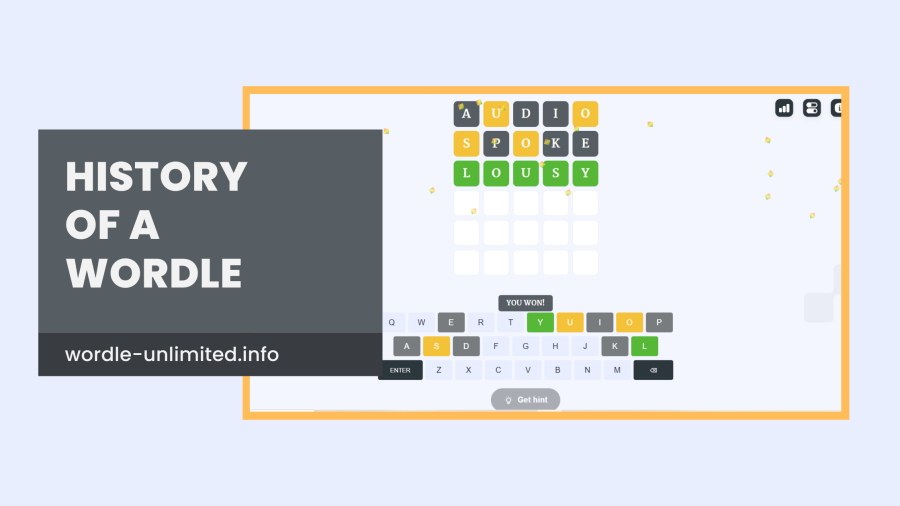
Wordle has quickly become a global phenomenon, captivating millions of players around the world with its simple yet addictive format. The game's rapid rise in 2021 has changed gaming culture, making it a favourite. Wordle's goal is simple: guess a secret five-letter word in six trials, utilising feedback to focus in. Wordle, a personal initiative by Josh Wardle, has become a fixture in everyday entertainment with its simple rules, daily challenge, and social sharing feature, inspiring a wave of similar word games and building a daily connection among its players.
The first Wordle was built in 2008 by computer scientist Jonathan Feinberg as a word cloud generator. Feinberg's Wordle let users enter text and visualise the most common words in a cloud, with word sizes proportionate to frequency.
The purpose was to provide a visually appealing approach to convey text data for analysing the most prevalent terms in a block of text, unlike the modern word-guessing game. This early Wordle was a popular visualisation and data analysis tool, but it was nothing like the daily challenge game that would become a global phenomenon.
The original Wordle concept inspired software programmer Josh Wardle to create a puzzle game in late 2021. Wardle made the game for his word game-loving spouse Palak Shah. He wanted to create something simple, fun, and engaging for them. With this in mind, he devised the game where players must guess a five-letter word in six attempts, receiving feedback after each guess on whether letters are valid and in the right position.
The game was tested with friends and family and immediately became popular due to its addictiveness. The clear layout, simple rules, and daily challenge format make Wordle ideal for players to return daily and try a new word. Its feedback-driven design and social media-shareable outcomes fuelled its rapid appeal. After Wardle's Wordle was introduced in October 2021, it went viral, attracting millions of daily players worldwide by early 2022.
Wordle is a daily word puzzle launched in 2021 and acquired by the New York Times in 2022. Every day, users must guess the 5-letter word for the day. When a player predicts the correct letter in the proper location, the square becomes green. If they predict the correct letter in the incorrect location, it becomes yellow.
Players can post their findings on social media to demonstrate how many attempts it took them to spread the word. Each estimate is represented by a series of square emojis in green, yellow, and grey. This means users can reveal their results without spoiling them for others.
Users are only given six tries to find the solution. If they do not guess the proper word within six trials, their streak is reset. Losing a streak can be quite frustrating for Wordle users on a daily basis.
The allure lies in its simplicity. Users can only play once a day, requiring moderation. Wordle is an excellent solution for individuals who doomscroll or binge-play games in order to boost digital well-being.
Players can play the Wordle game online for free, without having to download anything. It has just three settings: hard mode, dark mode, and colour blind mode. Without advertisements, gamers are not encouraged to focus on anything other than the game.
The goal is to guess a five-letter word within six attempts.
Enter a five-letter word as your first guess. It can be anything, but make it five letters.
After each guess, the game gives colour feedback:
Green: Correct and correct letter placement.
Yellow: The letter is in the word but misplaced.
Grey: No letter in the term.
Adjust your next guess using colour feedback. As an example:
Keep green letters in place.
Reuse yellow letters in different places.
Skip grey letters in future guesses.
Use five-letter words to cover popular vowels and consonants.
With each guess, use phrases to remove options.
Words commonly feature common letter combinations like "th," "ing," etc. Focus on letter frequency patterns.
Word-of-mouth and social media spread Wordle. Its simplicity and everyday challenge attracted gamers who appreciated the quick, rewarding puzzles. Sharing findings as coloured blocks on Twitter spread the #WordleChallenge quickly.
Wordle became popular as users posted their daily wins. Social media boosted this popularity, and media outlets and blogs covered the game's quick rise, cementing its place in pop culture and making it a daily habit for millions.
From a simple word cloud generator to a global phenomenon, Wordle shows how simplicity and social engagement can power games. Millions of gamers appreciate it because of its simple rules, daily challenge style, and opportunity to share results. Word-of-mouth and social media have made the game a pop culture icon, generating a wave of similar puzzle games and creating a daily connection among players. Wordle continues to attract and challenge players every day, illustrating that often the simplest games have the most impact on digital entertainment.